Best Decorative Pots for Monsteras (Sizes + Recommendations)
- Dec 12, 2025
- 3 min read
Updated: Dec 25, 2025
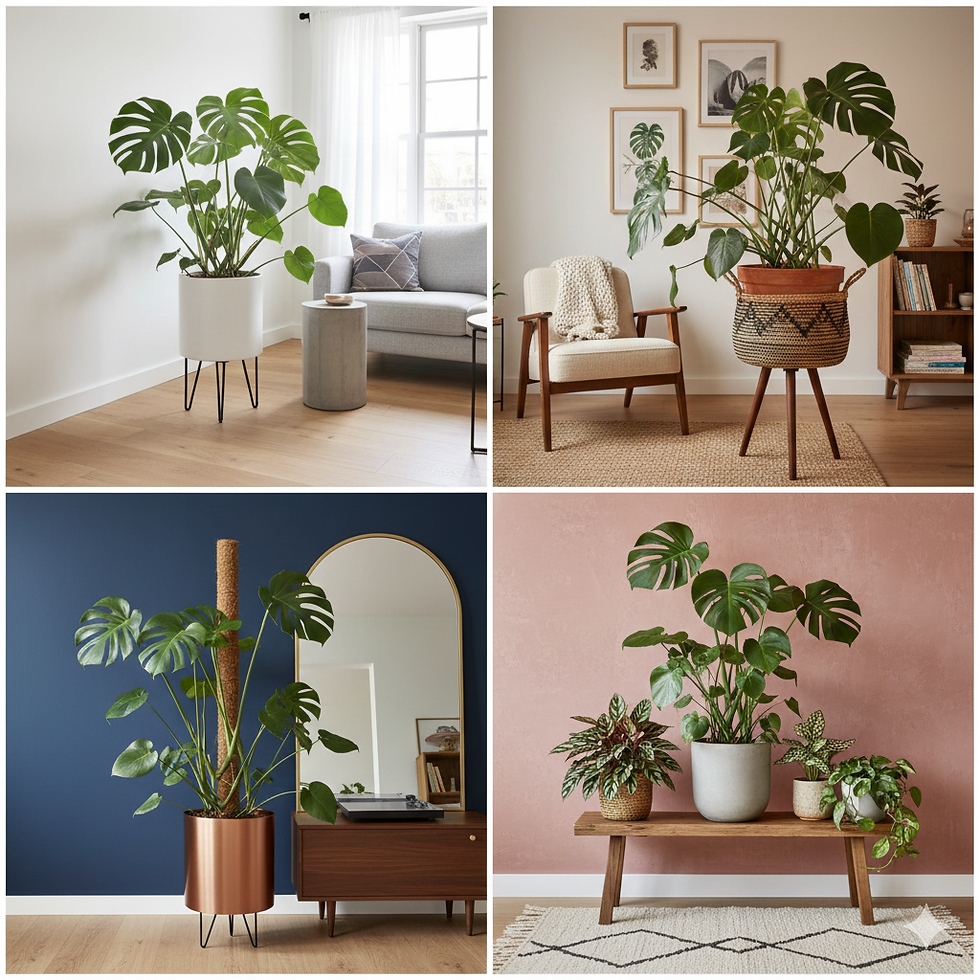
Finding the "Perfect" Pot for Your Monstera: A Fun Guide to Choosing the Right Home for Your Plant
Finding the "perfect" pot for your Monstera is a balancing act between aesthetic beauty and the specific biological needs of these tropical climbers. Because Monsteras can grow to massive sizes, choosing the wrong pot can lead to a literal "tipping point" (where the plant falls over) or health issues like root rot.

Here is the definitive guide to choosing decorative pots that keep your Monstera both stylish and stable.
1. The Golden Rule of Sizing
Monsteras prefer to be slightly "snug" but not strangled.
The "2-Inch" Rule: When repotting, always choose a pot that is only 2 inches (5 cm) wider in diameter than the current one.
Why? If the pot is too large, the excess soil stays wet for too long because there are no roots to drink the water, which leads to root rot.
Size Recommendations by Plant Stage
Plant Age / Stage | Recommended Pot Diameter | Best Style |
Cuttings / Seedlings | 4 – 6 inches | Small ceramic or plastic |
Juvenile (1-2 years) | 8 – 10 inches | Decorative ceramic or terracotta |
Mature (3+ years) | 12 – 14+ inches | Heavy concrete, stone, or large resin |
Giant Specimens | 18 – 24 inches | Large floor planters with wheels |
2. Best Materials for Monstera Health
While "decorative" is about the look, the material affects how often you need to water.
Terracotta (The Beginner's Best Friend)
Pros: It’s porous, meaning it "breathes." It allows oxygen to reach the roots and helps excess moisture evaporate. It's also heavy, which provides a sturdy base for top-heavy plants.
Cons: Soil dries out faster, so you’ll water more frequently.
Best for: "Over-waterers" and those who want a classic, Mediterranean look.
Ceramic & Glazed Stone
Pros: Beautiful, endless design options, and holds moisture well.
Cons: Very heavy when full of wet soil. Glazed ceramic is non-porous, so drainage holes are mandatory.
Best for: Living room centerpieces and keeping a consistent moisture level.
Resin & Fiberglass
Pros: Lightweight and mimics the look of concrete or stone. Great for large Monsteras that you may need to move occasionally.
Cons: Can be expensive for high-quality versions; cheap plastic can become brittle.
Best for: Large floor plants where weight is an issue.
3. The "Cache Pot" Strategy (The Designer Secret)
Many of the most beautiful decorative pots do not have drainage holes. To use these without killing your plant:
Keep your Monstera in its ugly plastic nursery pot (which has great drainage).
Place that plastic pot inside the beautiful decorative cache pot.
The Trick: When you water, take the plastic pot to the sink, let it drain completely, then place it back into the decorative one. This keeps your floors dry and your roots healthy.

4. Stability and Support
Monsteras are climbers. As they grow, they become "top-heavy."
Base Weight: Ensure the bottom of your pot is wide. Avoid "urn" shapes that taper significantly at the bottom, as a large Monstera leaf can act like a sail and blow the whole thing over in a draft.
Moss Pole Compatibility: Choose a pot deep enough to bury at least 4–6 inches of a moss pole or wooden stake. This ensures the support doesn't wobble as the plant climbs.
Summary Checklist Before You Buy
[ ] Is it 2 inches wider than the current root ball?
[ ] Does it have a drainage hole (or will you use it as a cache pot)?
[ ] Is it heavy enough to support a moss pole?
[ ] Does the style match your room’s "vibe"?
Conclusion: Enjoy the Journey of Plant Parenting
Choosing the right pot for your Monstera is more than just a task. It's a journey! As you explore different styles and materials, remember that the right pot will not only enhance your plant's health but also bring joy to your space. Happy planting!


Comments