Pothos Care Guide: How to Grow Full, Trailing Vines Indoors
- Dec 16, 2025
- 2 min read
Updated: Dec 25, 2025
Commonly known as "Devil’s Ivy" because it is nearly impossible to kill, the Pothos (Epipremnum aureum) is the undisputed champion of the apartment plant world.1 Whether you are a seasoned "plant parent" or someone who historically struggles to keep a cactus alive, the Pothos is your best friend.
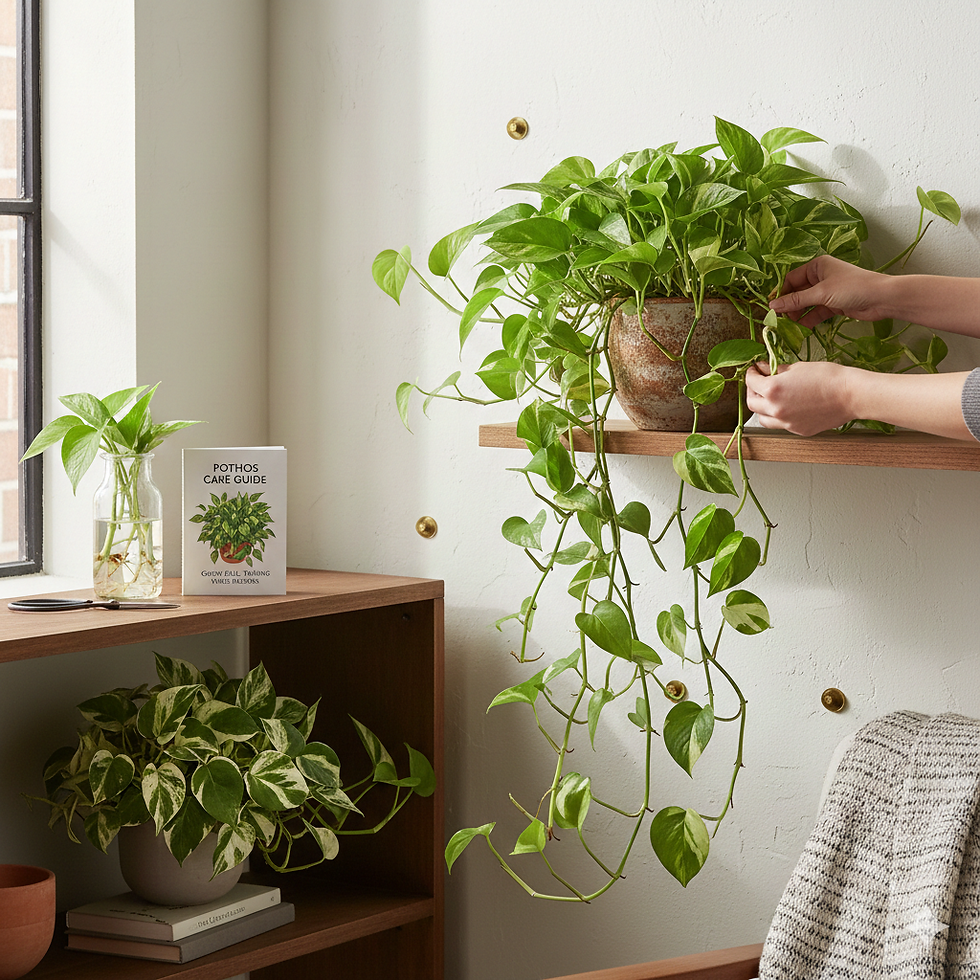
It’s fast-growing, incredibly resilient, and provides that lush, jungle aesthetic that transforms a room.2 Here is everything you need to know to grow long, healthy, and full trailing vines.
Why the Pothos is the Ultimate Indoor Plant
Adaptability: It thrives in a wide range of environments, from humid bathrooms to dry offices.3
Air Purifying: It’s known to help filter common household toxins from the air.4
Fast Results: In peak growing season, a healthy Pothos can grow several inches a month.
Essential Care Requirements
To keep your Pothos happy, you don't need a green thumb—just a basic understanding of its "love language."
Feature | Preference | Pro Tip |
Light | Bright, indirect light | Can survive in low light, but variegation (white/yellow spots) may fade. |
Water | Every 1–2 weeks | Wait until the top 2 inches of soil are dry. If leaves wilt, it's thirsty! |
Soil | Standard potting mix | Ensure your pot has drainage holes to prevent root rot. |
Temperature | 60°F–85°F | Avoid placing it directly in front of AC vents or drafty windows. |
Mastering the "Full" Look: Shaping and Pruning
One common issue with Pothos is that they can become "leggy"—long, thin vines with very few leaves near the base.5 If you want a bushy, full plant rather than a few thin strings, you have to be brave with the scissors.
The "Haircut": Pruning encourages the plant to branch out from the base. Cut just below a node (the little brown bump where a leaf meets the stem).6
Redirecting: Use small command hooks or "plant clips" to guide vines along walls or mantels.
Tucking: If the top of your pot looks bare, take a long vine and pin it back into the soil using a bent paperclip. New roots will form at the nodes, filling out the center.7
Propagation: Plants for Free
The best part about Pothos is that one plant can easily become ten. Propagation is simple and highly rewarding.
Snip: Cut a 4–6 inch section of vine, ensuring there are at least 2–3 nodes.
Strip: Remove the bottom-most leaf so the node is exposed.
Submerge: Place the cutting in a glass of clean water. Ensure no leaves are touching the water.
Wait: In 2–4 weeks, you’ll see white roots. Once the roots are 1–2 inches long, you can plant them back into the main pot or start a new one!
Troubleshooting Common Problems
Yellow Leaves: Usually a sign of overwatering. Let the soil dry out completely before watering again.
Brown, Crispy Edges: This typically means the humidity is too low or the plant is getting too much direct sunlight (sunburn).8
Loss of Variegation: If your marbled or "Golden" Pothos is turning solid green, it’s "stretching" for light.9 Move it closer to a window.
A Quick Safety Note: Pothos are toxic if ingested by pets or small children.10 It’s best to keep those beautiful trailing vines high up on bookshelves or in hanging planters!


Comments