How to Choose the Right Pot Size (This Mistake Slows Growth)
- Dec 22, 2025
- 3 min read
Updated: Dec 25, 2025
It's a common scenario: you bring home a new plant, and its tiny nursery pot looks inadequate. Your first instinct might be to put it into the largest, most beautiful pot you can find. While well-intentioned, this is one of the most common—and rarely explained—mistakes that can severely stunt your plant's growth, leading to a host of problems from root rot to stunted development.

Choosing the right pot size isn't just about aesthetics; it's crucial for your plant's health and ability to thrive. Here's why and how to get it right.
The Goldilocks Principle: Not Too Big, Not Too Small
When a plant is placed in a pot that is too large for its current root system, a critical imbalance occurs. The excess soil holds onto moisture for far longer than the plant's roots can absorb it.
The Problem: Constantly damp soil creates an anaerobic (oxygen-deprived) environment, which is the perfect breeding ground for harmful bacteria and fungi that cause root rot. Even if root rot doesn't set in immediately, the roots are in a state of constant stress, struggling to access oxygen and sitting in overly saturated conditions. This shifts the plant from a "growth" mindset to a "survival" one.
The Result: Stunted growth, yellowing leaves (often mistaken for underwatering), and a generally unhappy plant.
The Fix: When repotting, choose a pot only 1-2 inches larger in diameter than the plant's current root ball or nursery pot. For very large plants (10+ inches), you might go up 2-4 inches. This provides just enough room for new root growth without overwhelming the plant with too much soil. This is a key part of the 70/30 rule in gardening, where setting up the right environment—like the correct pot size—is 70% of your success.
Conversely, a pot that is too small leads to a root-bound plant. While less immediately deadly than an oversized pot, it also stops growth. The roots become so dense that they can't absorb enough water or nutrients, effectively strangling the plant.
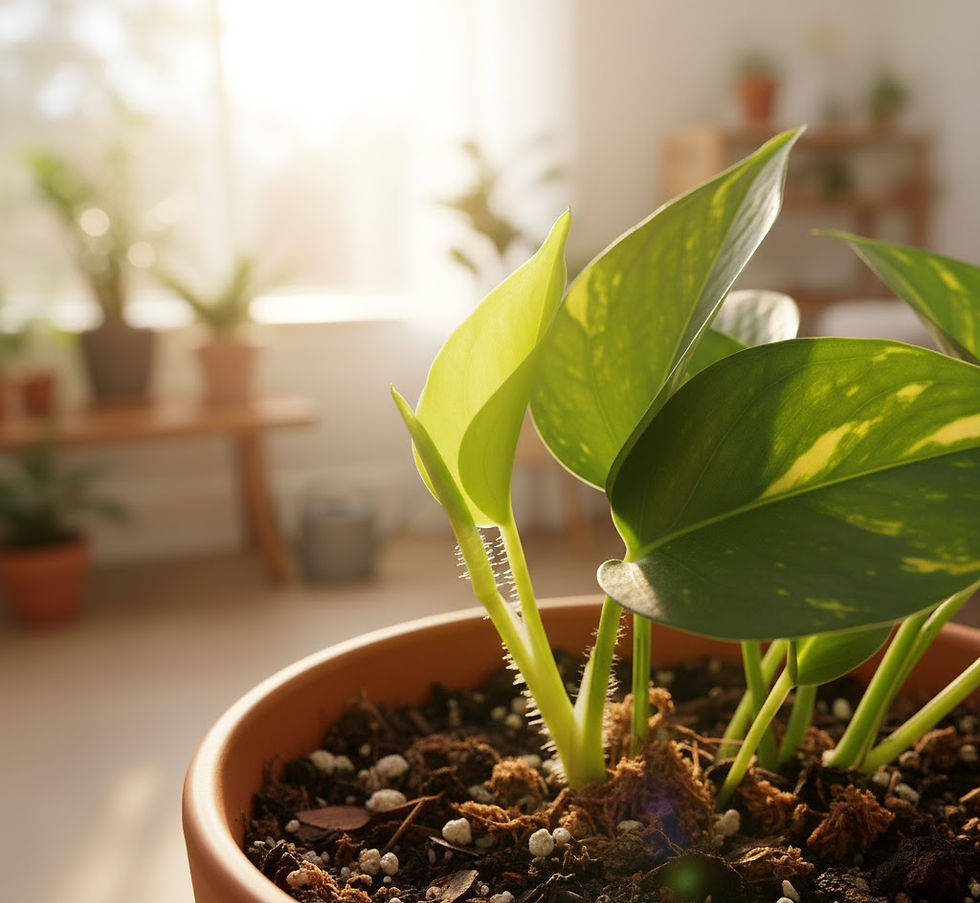
Potting Material: Plastic vs. Ceramic vs. Terracotta
The material of your pot plays a significant role in moisture retention and root health.
Terracotta (Unglazed Clay):
Pros: Highly porous, allowing water to evaporate through its walls. This makes it excellent for plants that prefer drier conditions between waterings, like cacti, succulents, and the snake plant. It also promotes better airflow to the roots, reducing the risk of root rot.
Cons: Dries out quickly; plants like the spider plant might need more frequent checks.
Plastic:
Pros: Non-porous, retaining moisture for longer. Great for plants that prefer consistently moist soil, like the pothos, or for plant parents who tend to underwater.
Ceramic (Glazed):
Pros: Non-porous, similar to plastic in terms of moisture retention, but often heavier and more aesthetically pleasing.
The Drainage Hole Myth: More Isn't Always Better
You've likely heard that good drainage is paramount, and it is. However, the common misconception is that many drainage holes or a thick layer of pebbles at the bottom of a pot somehow "improve" drainage. This isn't entirely accurate.
The Reality: A single, adequate drainage hole is perfectly sufficient. The issue isn't typically the number of holes, but rather the quality of the potting mix and the pot size.
The "Pebble Layer" Myth: Adding a layer of pebbles or broken pot shards at the bottom of a pot does not improve drainage. Instead, it creates a "perched water table," a layer of saturated soil just above the pebbles where water accumulates, increasing the risk of root rot.
The Fix: Always use a well-draining potting mix appropriate for your plant. If you're concerned about soil escaping, place a small piece of mesh or a coffee filter over the drainage hole, not pebbles. The goal is to allow excess water to escape freely, with no obstructions or false bottom layers.
By understanding these often-overlooked aspects of pot selection and drainage, you can provide your plants with the ideal environment to move from mere survival to flourishing growth. For more detailed guides, check out the rest of our PlantJoys tips. Happy potting!


Comments